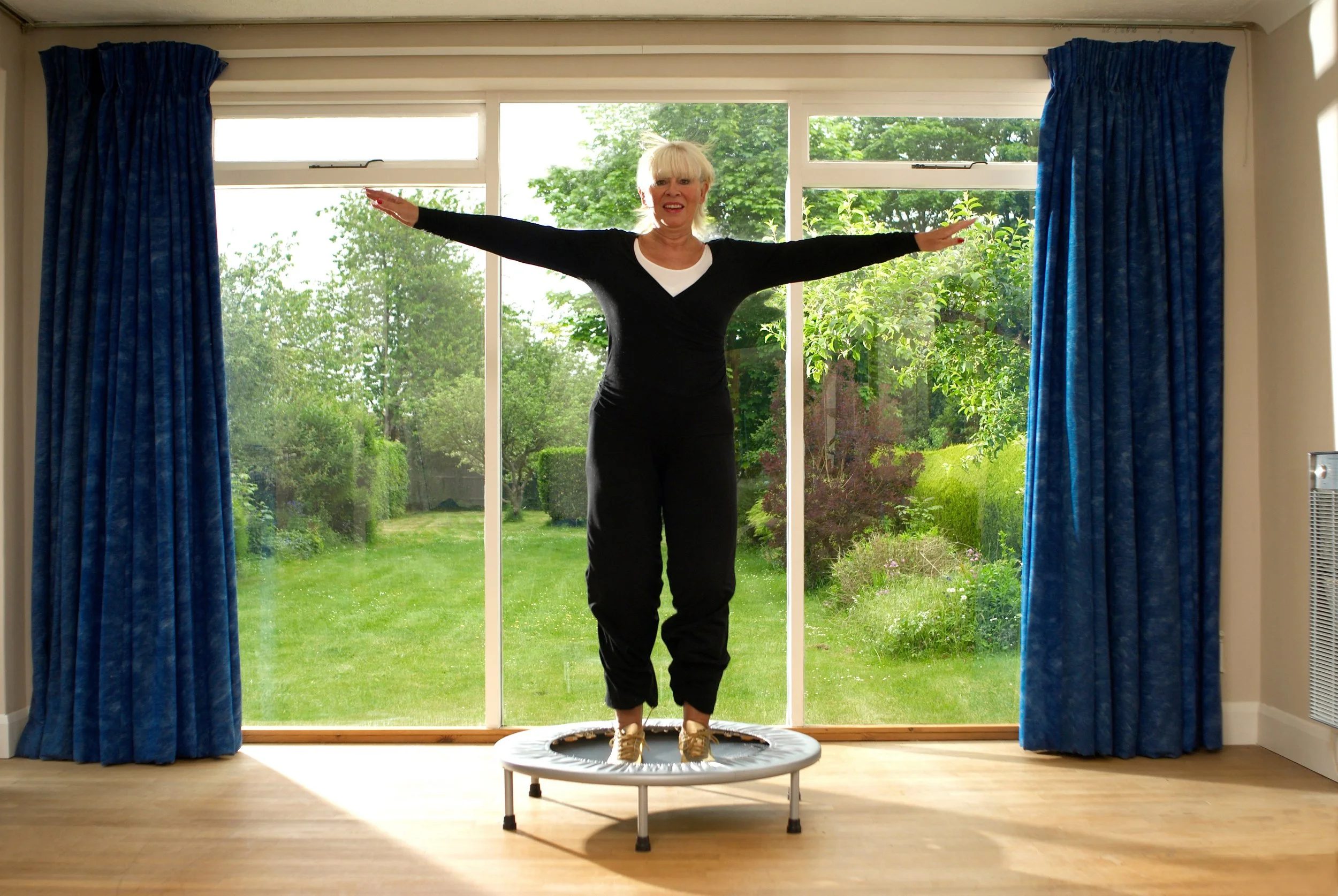

When you think of exercise, your mind probably jumps to running, weightlifting, or yoga. But there's a playful, low-impact workout that offers profound, whole-body benefits: rebounding—jumping on a mini-trampoline. Far from just a fun activity, rebounding is a powerful tool for promoting a healthy lifestyle, supporting your immune system, and protecting your joints.
Mobilize Your Ankles to Prevent Back Pain
Lower back pain is of course one of the most common complaints that brings people into the clinic. In the search for relief, folks often focus on the usual suspects: core strength, hip flexibility, and time spent sitting. And while these areas are undoubtedly crucial, there is a smaller, often-ignored joint at the very bottom of the chain that could be silently sabotaging your efforts: the ankle.
The Kettlebell: Awkward on Purpose
When you think of a strong core, do you imagine six-pack abs? We view the core not as a single sheet of muscle but as a 360-degree cylindrical powerhouse essential for movement, balance, and, most critically, spinal health. Your core is the nexus that connects your upper and lower body. Its primary job is not to move you, but to stabilize you—to resist forces that attempt to bend, twist, or buckle your spine. And kettlebells are a great tool for strengthening your core.
How to Walk to Reduce Joint Stress
It’s easy to dismiss walking as a passive activity. You lace up your shoes and go, trusting your body to manage the incredible forces involved in propelling you forward. But the average person takes over 2,000 steps per day, and with each step, your joints, muscles, and connective tissues endure impact forces equal to 1.2 to 1.5 times your body weight. Over time, faulty mechanics in this cycle are not just inefficient, they're a direct source of the chronic pain, stiffness, and joint vulnerability we often see in the clinic.
Caring for Mid-life Shoulders
The shoulder is the most mobile joint in the human body, but this freedom comes at a price: vulnerability. As we enter mid-life (typically defined as ages 40 to 60), years of repetitive motion, poor posture, and deconditioning can catch up with us, making us more susceptible to chronic pain, stiffness, and injury.
Get Your Daily GBOMBS
Decoding Your Posture (For a Healthier Spine)
Have you ever caught your reflection in a window and noticed that your shoulders are a bit more rounded than you thought? Or perhaps a friend has gently reminded you to "stand up straight"? While these moments might seem minor, they are part of a larger conversation your body is having—a silent language of posture that reveals much about your physical and mental well-being.
Unplug, Unwind, and Realign
Best Home Tools: Electric Massagers
Electric massagers can be an effective way to get some of the benefits of a therapeutic treatment between visits to the clinic. These tools leverage various technologies to mimic professional techniques, offering unique benefits that enhance well-being. Let’s check out the advantages and disadvantages of the major types available.
Therapeutic foot massage
Foot massage can be a powerful tool for enhancing physical comfort and mental well-being. From managing chronic pain and reducing stress to improving sleep and supporting patients with serious illnesses, the therapeutic applications of foot massage are diverse and well-supported by a growing body of research.
Add more life to your years
We hear it all the time: "Exercise adds years to your life." While scientifically sound, that statement often falls a bit flat. It conjures images of long, but unenjoyable, lives. But exercise can be more than a grim prescription for a longer existence. It can add more life to your years, by helping you be more vibrant, social, and independent.
Salient Salt Stats
Salt, a seemingly simple ingredient, has become a complex topic in the world of nutrition. We all know it enhances the flavor of food, but how much is too much? Recent research sheds light on the potential dangers of high sodium intake, while also suggesting miso as an alternative. Let's delve into the science behind salt and explore strategies for a healthy relationship with this flavor enhancer.
Cryotherapy: The Science Behind the Cold Shock
Cryotherapy, the practice of exposing the body to extremely cold temperatures for a short duration, has gained popularity in recent years. While it may seem counterintuitive to subject oneself to such harsh conditions, there is growing evidence to support its potential benefits for both physical and mental health.
Facial Massage: A Natural Approach to Wrinkle Reduction
In Portland, wrinkles are more likely to be seen as a badge of honor than an issue to address. And luckily, we don’t have year-round intense sun to worry about. Nonetheless, facial massage, a time-honored beauty practice, has gained popularity in recent years as a potential alternative to invasive anti-aging treatments. It may not erase wrinkles entirely, but regular facial massage can help to improve skin elasticity and promote a more glowing complexion. It also feels great.
Best Home Tools: Foam Rollers
Foam rolling, a self-massage technique that involves using a cylindrical foam roller to apply pressure to muscles and fascia, has gained significant popularity in recent years. This practice, often used by athletes and fitness enthusiasts, offers a wide range of benefits for individuals of all ages and activity levels.
Unlocking Your Core: A Deep Dive into Psoas Massage
The psoas (SO-az) is a deep-seated muscle that plays a crucial role in our overall health and well-being. Located deep within the core, the psoas connects the spine to the femur, influencing posture, mobility, and even our emotional state. Psoas massage, a specialized form of bodywork, focuses on releasing tension and improving the function of this vital muscle.
The Siesta: A Power Nap Rooted in Biology
Strength Training for Beginners: Grow Your Own Muscles
Strength training, often associated with bulging biceps and chiseled physiques, offers a wealth of benefits for everyone — regardless of your age or fitness level. Whether your goal is to increase muscle mass, improve athletic performance, or simply enhance overall health and well-being, strength training can help you get where you want to go. And yes, it can be fun!